Will India extradite Shaikh Haseena?
THE COURT ORDER
Bangladesh’s interim government has cited the India–Bangladesh Extradition Treaty (2013) to request the return of former Prime Minister Sheikh Hasina after an arrest warrant was issued by the International Crimes Tribunal (ICT) for “crimes against humanity.”
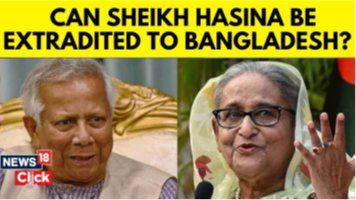
WILL SHE BE EXTRADITED?
While the government of Bangladesh has formally requested the extradition of former Prime Minister Sheikh Hasina from India, it is highly unlikely she will be extradited.
Both
- The bilateral extradition treaty between India and Bangladesh (2013) and
- India’s Extradition Act (1962) provide grounds for India to refuse the request, primarily on the basis that the charges appear politically motivated.
GROUNDS FOR REFUSAL
- Political Offense Exception: The India-Bangladesh Extradition Treaty of 2013, specifically Article 6, states that extradition may be refused if the alleged offense is considered “of a political character”. India’s own Extradition Act, 1962, (Section 31) also prohibits the surrender of a fugitive if the offense is political in nature or if the request is intended to punish them for political reasons.
- Lack of Good Faith: Article 8 of the treaty & Section 29 of Extradition Act, 1962 allows for refusal if the accusation is not made in good faith or in the interests of justice. Given the current political situation in Bangladesh and the nature of the charges (crimes against humanity for commanding a crackdown on student protests while in office), experts argue India can use this clause to deny the request.
Dual Criminality Concerns: The treaty requires “dual criminality,” meaning the alleged offense must be punishable under the domestic laws of both countries. While “crimes against humanity” is recognized under Bangladesh’s specific war-crimes framework, India interprets such charges differently, providing another potential legal barrier to extradition.
Questionable Judicial Process: Concerns have been raised by observers and human rights organizations about the fairness and impartiality of the International Crimes Tribunal (ICT) that sentenced Hasina to death in absentia. India could cite these due process concerns as a reason for refusal.
IS THERE A MECHANISM TO ADJUDICATE DISPUTES REGARDING THE TREATY?
Well, it is a bilateral treaty signed between two sides.
There is no neutral mechanism to adjudicate disputes arising from the treaty. The United Nations cannot intervene in the implementation of a bilateral extradition agreement, and the International Court of Justice (ICJ) can only hear cases with the consent of both governments. This is a highly unlikely scenario in the current context.
That’s not all. The treaty itself includes an escape clause in Article 21(3) which allows either country to terminate the treaty with six months’ notice.
Note: Connect with Vajirao & Reddy Institute to keep yourself updated with latest UPSC Current Affairs in English.
Note: We upload Current Affairs Except Sunday.
The post Will India extradite Shaikh Haseena? appeared first on Vajirao IAS.