Indian Polity & Governance
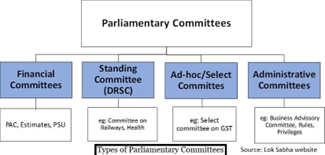
Parliamentary Standing Committees Reports:
Context
Multiple reports (Science & Tech, Commerce, Education) tabled.
-
- Part of Parliamentary oversight mechanism.
- Department-related Standing Committees (DRSCs).
- Examine Bills, policies, and budgets.
- Consist of members from Lok Sabha and Rajya Sabha.
- Reports are advisory, not binding.
- Improve legislative scrutiny.
- Function outside party whip system.
- Promote detailed examination of issues.
- Cover sectors like defence, environment, commerce.
- Enhance executive accountability.
(PIB)
International Developments
WTO Ministerial Conference (MC14):
Context
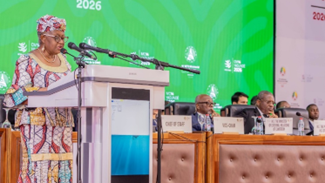
14th WTO Ministerial Conference to be held in Yaounde (Cameroon).
-
- WTO is headquartered in Geneva.
- Ministerial Conference is highest decision-making body.
- Held every 2 years.
- Deals with trade rules, disputes, negotiations.
- Key issues: agriculture subsidies, fisheries, e-commerce.
- India focuses on food security and MSP.
- WTO agreements are multilateral.
- Dispute Settlement Body ensures compliance.
- Principle of Most Favoured Nation (MFN).
- Special provisions for developing countries.
(PIB)
International Relations
West Asia Crisis & India’s Energy Security:
Context
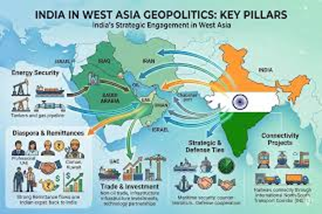
Ongoing West Asia conflict impacting global energy supply chains.
-
- Strait of Hormuz handles ~40% of India’s crude imports.
- India is 3rd largest oil importer globally.
- Strategic Petroleum Reserves act as energy buffer.
- Crisis highlights need for energy diversification.
- Push for renewables, nuclear energy, green hydrogen.
- Importance of critical minerals (lithium, cobalt).
- Need for energy storage technologies.
- Electrification of transport reduces import dependence.
- India maintains strategic neutrality in West Asia.
- Supply disruptions impact inflation and fiscal stability.
(IE+PIB)
Economy
Strategic Petroleum Reserves (SPR):
Context
India ensuring energy availability amid global crises.
-
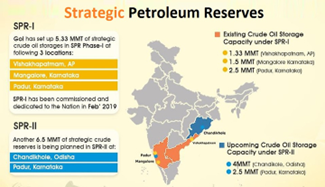
- SPR are emergency crude oil stockpiles.
- Stored in underground rock caverns.
- Managed by Indian Strategic Petroleum Reserves Ltd (ISPRL).
- Key locations: Visakhapatnam, Mangaluru, Padur.
- Capacity ~5.3 million tonnes (expanding).
- Helps during supply disruptions.
- Part of energy security strategy.
- Linked to International Energy Agency norms (not a member).
- Can stabilize domestic fuel prices.
- Supports strategic autonomy.
(ET+IE)
RBI Monetary Policy Outlook:
Context
RBI likely to maintain repo rate at 5.25%.
-
- Repo rate is the rate at which RBI lends to banks.
- Inflation target: 4% ± 2%.
- Inflation has remained below 4% for a year.
- RBI follows Flexible Inflation Targeting (FIT).
- Monetary Policy Committee (MPC) decides rates.
- MPC consists of 6 members.
- Policy stance: Neutral.
- Risk: Imported inflation due to oil prices.
- GDP growth projected around 7%.
- Concern: Stagflation risk (low growth + high inflation).
(ET)
India Exploring Local Currency Trade for Oil:
Context
India exploring settling oil trade in local currencies with West Asian countries.
-
- Reduces dependence on US Dollar.
- Linked to rupee internationalisation.
- Helps avoid exchange rate volatility.
- Used via bilateral trade agreements.
- Already experimented with Russia (rupee-ruble trade).
- Can reduce current account pressure.
- Challenges: currency convertibility issues.
- Requires trusted financial mechanisms.
- Impacts global petrodollar system.
- Strengthens India’s economic sovereignty.
(TH)
Geography, Mapping, Ecology & Environment and DM
India’s Updated Nationally Determined Contributions (NDCs):
Context
Union Cabinet approved India’s updated NDC targets for 2031–2035 under the Paris Agreement.
-
- NDCs are submitted under UNFCCC as part of the Paris Agreement (2015).
- They are revised every 5 years (Article 4 of Paris Agreement).
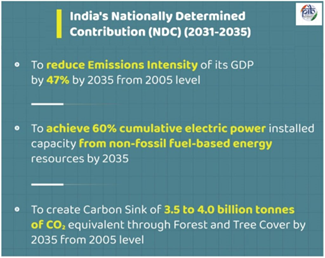
- India’s emission intensity reduction target increased to 47% (from 2005 levels).
- Non-fossil fuel capacity target raised to ~60% by 2035.
- India already achieved ~52% non-fossil installed capacity by 2025.
- Carbon sink target increased to 3.5–4 billion tonnes CO₂ equivalent.
- Focus on CCUS (Carbon Capture, Utilisation and Storage) technologies.
- Gap exists: Installed capacity ≠ actual generation (~25% non-fossil generation).
- India’s Net Zero target remains 2070 (not 2050).
- NDCs are nationally determined but internationally monitored.
(PIB+TH)
Strait of Hormuz Tensions & India’s Access:
Context
Iran allowed India and select countries passage through Strait of Hormuz amid rising geopolitical tensions.
-
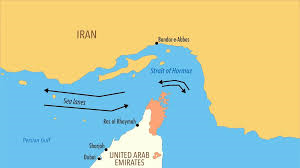
- Strait of Hormuz connects Persian Gulf → Gulf of Oman → Arabian Sea.
- Handles ~20–30% of global oil trade.
- India heavily dependent on West Asian crude imports.
- Strategic chokepoint, vulnerable to blockade/disruptions.
- Iran plays critical control role over the strait.
- Passage assurance reduces short-term supply risks.
- Linked to ongoing US–Iran tensions.
- Important for India’s energy security calculations.
- Highlights role of sea lanes of communication (SLOCs).
- India increasing naval presence in Indian Ocean Region.
(TH)
India’s Energy Stock Status:
Context
India reported oil reserves for ~60 days and LPG for ~1 month.
-
- Indicates energy preparedness.
- Includes commercial + strategic reserves.
- Important during global disruptions.
- LPG supply chain depends on imports + domestic refining.
- Strategic reserves stored in underground caverns.
- Helps manage price shocks.
- Linked to energy security policy.
- Compared with IEA norms (90 days).
- India not a full IEA member.
- Reinforces need for renewable transition.
(TH)
Defence & Security
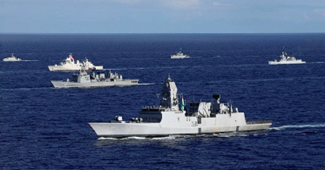
Operation “Urja Suraksha”:
Context
Indian Navy launched operation to secure energy shipments in Strait of Hormuz.
-
- Objective: Protect India-bound oil & gas vessels.
- Deployment of multiple frontline warships.
- Focus on LNG, LPG, crude oil carriers.
- Ensures safe maritime navigation.
- Linked to West Asia conflict situation.
- Example of naval diplomacy + security.
- Covers critical chokepoints.
- Demonstrates India’s blue-water naval capability.
- Supports economic stability.
- Reinforces SAGAR doctrine (Security and Growth for All in the Region).
(PIB+IE)
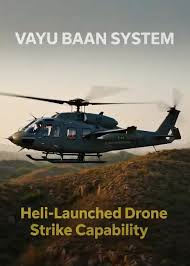
‘Vayu Baan’ – Helicopter-Launched Drone:
Context
IAF initiated project for helicopter-dropped unmanned aerial system.
-
- First air-launched drone system in India.
- Developed by IAF’s Directorate of Aerospace Design.
- Drone released mid-air from helicopter.
- Activates after wing deployment.
- Used for surveillance & tactical missions.
- Reduces reliance on foreign technology.
- Enhances precision operations.
- Part of defence indigenisation push.
- India joins limited global group (US, China).
- Supports Atmanirbhar Bharat in defence.
(PIB)
Government Schemes
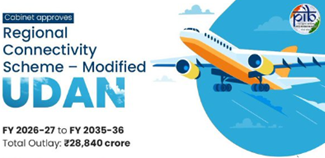
Regional Connectivity Scheme – UDAN:
Context
Modified UDAN scheme approved with large outlay.
-
- UDAN = Ude Desh ka Aam Nagrik.
- Launched in 2016.
- Objective: Affordable regional air connectivity.
- Operates on Viability Gap Funding (VGF).
- Focus on Tier-2 & Tier-3 cities.
- Implements capped airfares.
- Revives unserved/underserved airports.
- Managed by Ministry of Civil Aviation.
- Enhances regional economic growth.
- Integrates with tourism and logistics.
(PIB)
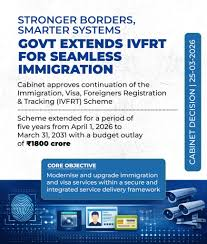
IVFRT Scheme Extension:
Context
Cabinet approved extension of Immigration, Visa, Foreigners Registration & Tracking (IVFRT) scheme till 2031.
-
- Scheme digitizes immigration and visa processes.
- Budget outlay: ₹1,800 crore.
- Operates under Ministry of Home Affairs.
- Integrates e-visa, biometric data, and tracking system.
- Aims to improve border security and surveillance.
- Enables real-time data sharing among agencies.
- Linked with Bureau of Immigration.
- Helps in identifying overstaying foreigners.
- Part of broader e-governance and internal security reforms.
- Enhances ease of travel and tourism management.
(PIB)
Important data/facts
Economy
India’s Agricultural Production Data:
Context
Government released latest agricultural production estimates.
Key Takeaways
-
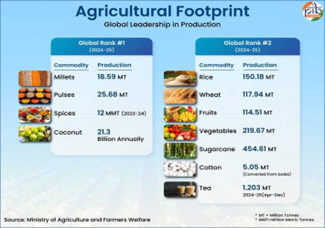
- India achieved a record foodgrain production of 357.73 MMT (2024-25), with horticulture output at 362.08 MT, reflecting a strong shift towards high-value crops.
- India ranks among the top producers globally, with 150.18 MT of rice, 117.94 MT of wheat, 25.68 MT of pulses, and 18.59 MT of millets, reinforcing its role in global food security (2024-25).
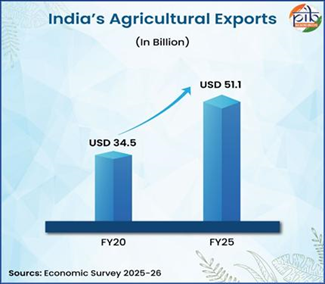
- Agricultural exports rose from USD 34.5 billion (FY20) to USD 51.1 billion (FY25), with processed food share increasing to 20.4%, signalling value-added growth.
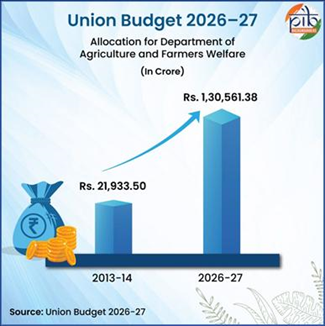
- Budget allocation rose from Rs.21,933 crore (2013-14) to Rs.1.30 lakh crore (2026-27), indicating sustained focus on agricultural development.
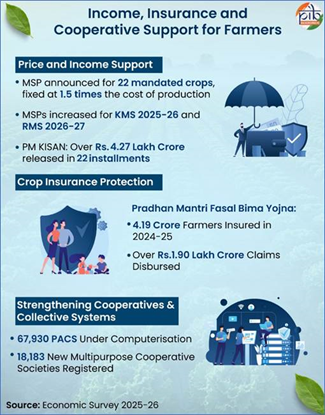
- Under PM-KISAN, Rs.4.27 lakh crore has been disbursed in 22 instalments, while crop insurance claims exceeded Rs.1.90 lakh crore, strengthening income security and risk protection.
- Rice production: ~150 million tonnes.
- Wheat: ~118 million tonnes.
- Pulses: ~25.7 million tonnes.
- Millets: ~18.6 million tonnes.
- Horticulture: ~362 million tonnes (higher than foodgrains).
- India is 2nd largest producer globally.
- Emphasis on millets (climate-resilient crops).
- Growth in value-added agricultural exports.
- Processed food share rising (~20%).
- Indicates diversification of agriculture.
(PIB)
Miscellaneous
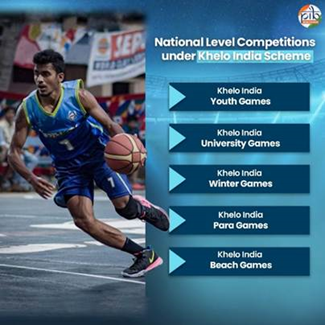
Khelo India Tribal Games:
Context
Promotion of sports among tribal youth.
-
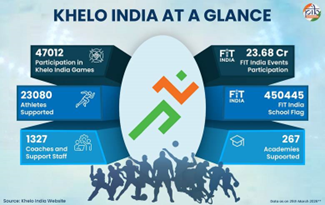
- Part of Khelo India Programme.
- Focus on indigenous tribal sports.
- Implemented by Ministry of Youth Affairs & Sports.
- Promotes talent identification.
- Encourages inclusion and cultural preservation.
- Aligns with Ek Bharat Shreshtha Bharat.
- Includes games like archery, wrestling, athletics.
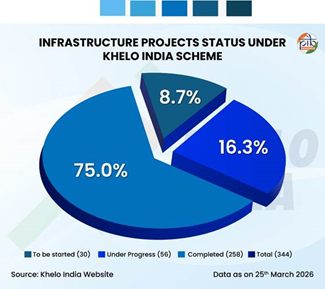
- Supports grassroots sports infrastructure.
- Links to Fit India Movement.
- Promotes tribal empowerment.
- The official mascot, Morveer, reflects the spirit of the Games. Derived from the Chhattisgarhi words ‘Mor’(our own) and ‘Veer’ (bravery), it symbolises pride, spirit and the identity of India’s tribal communities.

(PIB)
Spread the Word
The post Prelims Mantra – (26th, 27th & 28th /03/2026) appeared first on Lukmaan IAS.