IS INDIA’S 8.2% GROWTH RATE SUSTAINABLE?
WHY IN NEWS?
- India recorded 8.2% GDP growth, one of the fastest in the world.
- But IMF gave India a “Grade C” rating for the quality of its GDP data and national accounts.
- This raised a big question: “Is India truly growing strongly, or are there deeper structural problems?”
INDIA’S CURRENT ECONOMIC SITUATION
1. GDP Growth — 8.2%
- Shows strong economic momentum, not just a post-COVID bounce.
- Total output in one quarter: ₹48.63 lakh crore (very high).
2. Manufacturing Up — 9.1%
- Factories running closer to full capacity.
- Good sign for industrial demand.
3. Services Sector Strong — 9.2% (60% of GDP)
- Finance sector growing at 10.2% → more loans, more transactions.
4. GVA Growth Also Strong
- GVA rose from ₹82.88 lakh cr → ₹89.41 lakh cr.
- This means real production increased, not just prices.
5. Low Inflation
- Nominal GDP increased only slightly more than real GDP → inflation under control.
6. Consumption Rising
- PFCE up 7.9% → households spending more.
7. Agriculture Growth — 3.5%
- Better due to full reservoirs + improved horticulture.
8. Banking Sector Healthy
- Banks have clean balance sheets.
- Credit (loans) growing strongly.
9. Government Finances Stable
- GST + direct taxes remain strong.
- Spending quality better (more capital spending).
10. External Sector Stable
- Low current account deficit
- Strong services exports
- Good forex reserves
- Overall: Data shows strong momentum. India is growing even as many other countries slow down.
IMF’s GRADE C CATEGORISATION CONTROVERSY
- The IMF’s rating shocked many because India is growing fast but received a low grade.
IMF’s Main Concerns
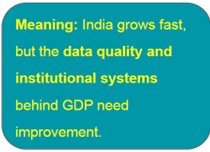
IMF said India’s data system has several technical weaknesses, such as:
- Old base year – still 2011-12
- Still uses wholesale price index (WPI) for some calculations instead of Producer Price Index
- Single deflation used too much → may create errors
- Mismatch between production data & expenditure data
- No seasonally adjusted GDP
- State-level data weak or missing after 2019
HIDDEN WEAKNESSES IN THE ECONOMY
Even with strong numbers, some sectors dragged:
1. Mining Almost Flat — 0.04%
- A long monsoon disturbed mining work.
2. Electricity/Utilities Weak — 4.4%
- Milder winter reduced power demand.
3. Uneven Recovery
- Agriculture: 14% of GVA, but employs ~45% of workforce.
- India’s workforce is stuck in low-productivity sectors.
4. Structural Issues
- Too many workers in agriculture & informal jobs.
- Goods exports still weak.
- Rupee stable but under pressure from high global dollar.
- Productivity still low in many sectors.
RBI’s CONCERN: LONG TERM RISKS
1. Global Trade Protectionism Rising
- Makes exporting goods harder for India.
2. Geopolitical tensions
- Affect global demand → affect India’s exports.
3. Institutions still need strengthening
- Better data systems
- Better coordination between states and centre
- Better labour productivity policies
WHAT DOES ALL THIS MEAN?
India is growing FAST in the short term.
- GDP of 8.2% is a big achievement.
But long-term stability needs STRONG FOUNDATIONS.
- The IMF is not doubting the growth rate — it is questioning the quality of systems behind the growth.
Growth is not evenly spread.
- Services booming
- Manufacturing improving
- Mining + utilities weak
- Agriculture growth still small but employs millions
India must fix:
- Data quality
- Labour productivity
- Institutional capacity
- Export competitiveness
SO IS 8.2% GROWTH SUSTAINABLE?
YES in the short term, because:
- Demand strong
- Manufacturing up
- Services booming
- Inflation under control
- Banks healthy
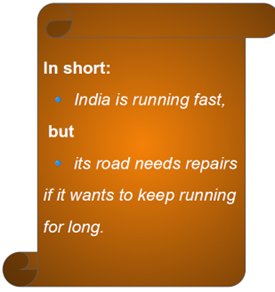
BUT NOT GUARANTEED in the long term, because:
- Structural issues remain
- Weak exports
- Low productivity
- Data system concerns
- Sectoral imbalance
Note: Connect with Vajirao & Reddy Institute to keep yourself updated with latest UPSC Current Affairs in English.
Note: We upload Current Affairs Except Sunday.
The post IS INDIA’S 8.2% GROWTH RATE SUSTAINABLE? appeared first on Vajirao IAS.