Indian Polity & Governance
India’s Digital Public Infrastructure:
Context
India highlighted the global adoption of Digital Public Infrastructure (DPI) frameworks.
-
- DPI refers to digital systems enabling public and private services at scale.
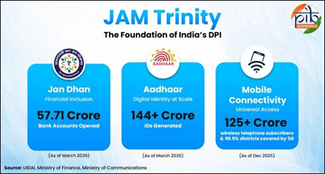
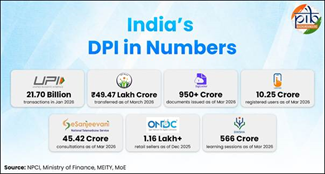
- India’s DPI includes Aadhaar, Unified Payments Interface, and DigiLocker.
- Aadhaar provides biometric digital identity.
- UPI enables instant bank-to-bank digital payments.
- DigiLocker allows secure digital storage of documents.
- DPI improves financial inclusion and governance efficiency.
- Several countries are studying India’s DPI model.
- DPI reduces transaction costs and service delivery barriers.
- Digital identity systems must address privacy and security concerns.
- DPI supports e-governance and digital economy growth.
(PIB)
Geography, Mapping, Ecology & Environment and DM
Concerns over Himalayan Glacier Retreat:
Context
Scientists warned that accelerated melting of Himalayan glaciers may threaten long-term water security in Asia.
-
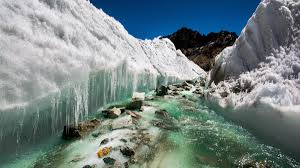
- The Himalayas are often called the “Third Pole” due to extensive ice reserves.
- Himalayan glaciers feed major rivers such as Indus, Ganga and Brahmaputra.
- Glacial retreat is driven primarily by rising global temperatures.
- Black carbon deposition accelerates glacial melting.
- Glacier retreat may initially increase river discharge, followed by long-term decline.
- Glacial lakes may expand and cause Glacial Lake Outburst Floods (GLOFs).
- Himalayan glaciers influence regional hydrological cycles.
- Millions of people depend on glacier-fed rivers in South Asia.
- Climate change impacts are particularly severe in high-mountain ecosystems.
- Monitoring glaciers involves remote sensing and field observations.
(TH)
Coastal Ecosystem Protection:
Context
Experts highlighted the importance of mangrove ecosystems for coastal protection and climate resilience.
-
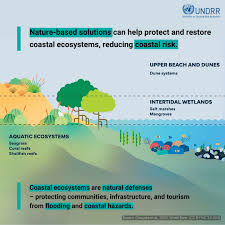
- Mangroves grow in intertidal coastal zones of tropical regions.
- They act as natural barriers against storm surges and cyclones.
- Mangrove ecosystems support rich biodiversity.
- Their roots stabilise coastal sediments.
- Mangroves store large amounts of blue carbon.
- India has major mangrove forests in the Sundarbans.
- Mangroves provide habitat for fish, crustaceans and birds.
- They improve coastal water quality.
- Mangrove degradation increases coastal erosion risks.
- Mangrove restoration is part of climate adaptation strategies.
(IE)
India’s Green Hydrogen Expansion:
Context
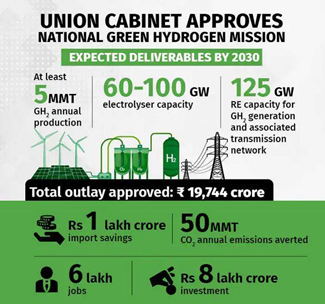
The government reviewed progress of the National Green Hydrogen Mission to position India as a global hub for hydrogen production.
-
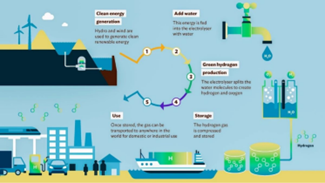
- Green hydrogen is produced by electrolysis of water using renewable electricity.
- It produces no carbon dioxide emissions during production.
- Hydrogen can be used in steel, fertiliser, refining and heavy transport sectors.
- Electrolysers split water into hydrogen and oxygen.
- Hydrogen has high energy density per unit mass but low volumetric density.
- Storage methods include compressed gas, liquefied hydrogen and chemical carriers.
- Green hydrogen can help decarbonise hard-to-abate industries.
- Ammonia derived from hydrogen can serve as an energy carrier.
- India aims to become a major exporter of green hydrogen and derivatives.
- Hydrogen blending in natural gas pipelines is being studied.
(PIB)
Ocean Acidification Concerns:
Context
Scientists highlighted growing risks of ocean acidification affecting marine ecosystems.
-
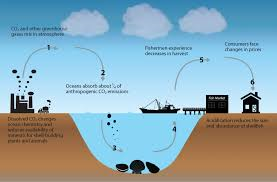
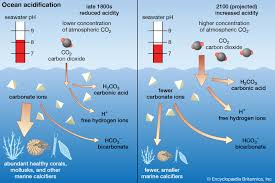
- Ocean acidification occurs when CO₂ dissolves in seawater forming carbonic acid.
- Increased acidity lowers pH of seawater.
- Acidification reduces availability of carbonate ions needed for shells.
- Marine organisms like corals, molluscs and plankton are vulnerable.
- Coral reefs rely on calcium carbonate skeletons.
- Ocean acidification is linked to anthropogenic CO₂ emissions.
- It affects marine food chains and fisheries.
- The ocean absorbs about one-quarter of global CO₂ emissions.
- Acidification can impair calcification processes.
- Long-term changes may affect global marine biodiversity.
(TH)
Wetland Conservation Efforts:
Context
Experts emphasised conservation of wetlands for biodiversity and water security.
-
- Wetlands include marshes, swamps, lakes and estuaries.
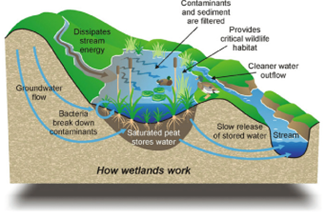
- They act as natural water filters.
- Wetlands support high biodiversity.
- They provide habitat for migratory birds.
- Wetlands help regulate floods and groundwater recharge.
- Wetlands store significant amounts of carbon in sediments.
- India participates in the Ramsar Convention.
- Ramsar sites are wetlands of international importance.
- Wetland degradation occurs due to urbanisation and pollution.
- Conservation improves ecosystem services and climate resilience.
(TH)
Science & Technology
Expansion of India’s Semiconductor Design Ecosystem:
Context
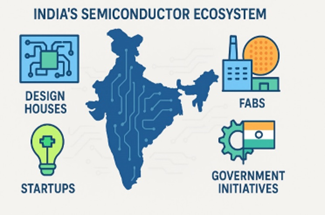
India emphasised strengthening semiconductor design capabilities under the Design Linked Incentive Scheme.
-
- Semiconductor chips are essential for computers, smartphones and automobiles.
- The Design Linked Incentive scheme supports chip design startups.
- India already has strong presence in semiconductor design services.
- The global semiconductor industry is highly capital-intensive.
- Chip manufacturing requires ultra-clean fabrication facilities.
- Semiconductor devices rely on controlled electrical conductivity of materials.
- Silicon is the most widely used semiconductor material.
- Semiconductor supply chains are geopolitically significant.
- Advanced chips require extreme ultraviolet lithography (EUV).
- Semiconductor design is critical for electronics manufacturing growth.
(ET)
Lithium Resource Exploration in India:
Context
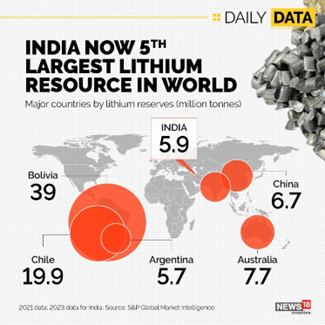
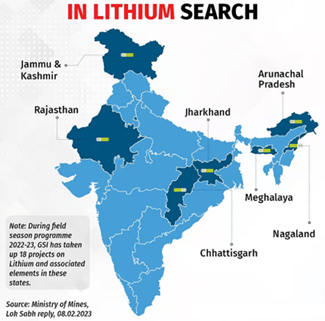
India intensified exploration of lithium resources to support electric mobility and battery manufacturing.
-
- Lithium is a light alkali metal belonging to Group 1 of the periodic table.
- It is a key component of lithium-ion batteries.
- Lithium occurs in brine deposits and hard-rock minerals such as spodumene.
- Major lithium producers include Australia, Chile and Argentina.
- Lithium brine extraction occurs mainly in salt flats (salars).
- Lithium batteries are widely used in EVs, smartphones and grid storage.
- Recycling lithium batteries can reduce critical mineral dependence.
- Lithium demand is rising due to energy transition technologies.
- Lithium-ion batteries operate through movement of lithium ions between electrodes.
- Battery technology improvements aim to enhance energy density and safety.
(ET)
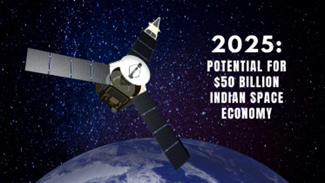
Expansion of India’s Space Economy:
Context
India’s space sector reforms continue to encourage private sector participation.
-
- Space sector reforms were introduced in 2020.
- Private companies can participate in satellite launches and manufacturing.
- Indian National Space Promotion and Authorisation Centre authorises private space activities.
- NewSpace India Limited handles commercialisation of ISRO technologies.
- Indian Space Research Organisation focuses on research and development.
- India operates its regional navigation system NavIC.
- Satellites support communication, weather forecasting and navigation.
- The global space economy is expanding rapidly.
- Satellite data supports agriculture and disaster management.
- India aims to increase its share of the global space economy.
(IE)
Government Schemes & Initiatives
National Bioenergy Mission Progress:
Context
The government reviewed the progress of the National Bioenergy Mission, which promotes biomass-based energy production.
-
- Bioenergy refers to energy derived from biological materials (biomass).
- Biomass sources include agricultural residues, forest residues, animal waste and organic municipal waste.
- Bioenergy technologies include biogas, bioethanol, biodiesel and biomass gasification.
- India promotes second-generation (2G) ethanol from agricultural residues.
- Ethanol blending in petrol reduces fossil fuel dependence and emissions.
- Crop residues like rice straw and wheat straw can be used for biofuel production.
- Biomass energy contributes to circular economy and waste management.
- Bioenergy projects can reduce stubble burning in northern India.
- Bioenergy is considered carbon-neutral under certain lifecycle conditions.
- The mission contributes to India’s renewable energy targets.
(PIB)
Spread the Word
The post Prelims Mantra – (12/03/2026) appeared first on Lukmaan IAS.